24/7 Schumann Resonance Graph
The raw electromagnetic picture of Earth — updated every hour from six independent observatories.

Last updated:

Last updated:

Last updated:

Last updated:

Last updated:
Last updated:
Explore
Pressure-Drop Headache Score
Barometric pressure + solar activity rolled into a daily risk index for 8 cities.
Check todayWhat Am I Looking At?
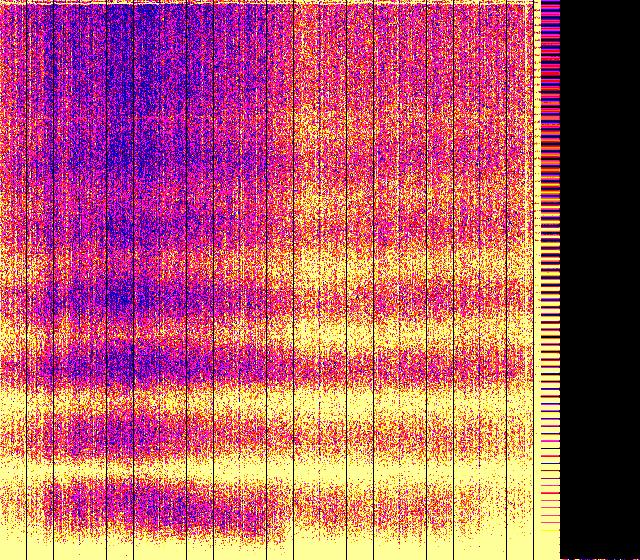
Each spectrogram shows electromagnetic energy between 0 and 50 Hz captured by a ground-based VLF receiver. The bright horizontal bands near 7.83, 14.3, 20.8, 27.3 and 33.8 Hz are the Schumann resonances — standing waves that form between the Earth's surface and the ionosphere.
Brighter colors mean stronger signal. When a geomagnetic storm hits, the whole spectrogram lights up — multiple bands brighten simultaneously, scores rise, and you may notice effects on sleep, mood, or focus.
We combine pixel-level analysis of these spectrograms with AI vision models to derive the activity score and status you see on the homepage. Six independent stations across three continents reduce single-source bias.
How We Score It
Our pipeline analyzes each spectrogram in two passes. First, a pixel analyzer measures the brightness of each Schumann band relative to a dynamic baseline. Then an AI vision model (Gemini Flash) examines the full image for patterns humans might miss — broadband excitation, harmonic splitting, data gaps.
The final score (0–100) is the higher of the two: pixel floor guarantees the score reflects objective signal strength, while the AI can flag subtle anomalies. Six stations are averaged with equal weight — so a storm that only appears on one station won't dominate the score.
Explore
See Tonight's Aurora Odds
Live Kp forecast + visibility map — find out if the lights reach your latitude tonight.
Open forecast